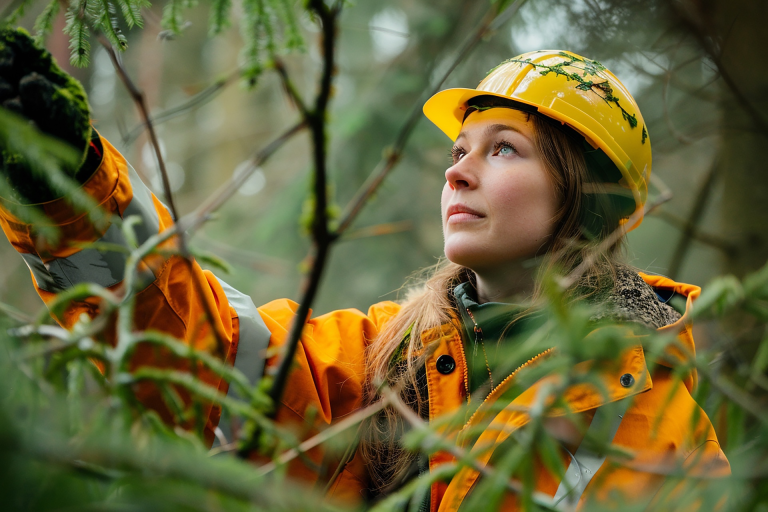


It's never too early to start planning for your environmental degree. Depending on where you are in your academic journey, check out our tips below to prepare for future major.
Where are you in your journey?
Congratulations! You already love science and the environment and are planning early. You have plenty of time to explore your interests and discover what excites you the most. Some ways to explore your interests now:
- Read books about science and scientists. Here are a few of our favorites to look for at your local library.
- Join a science club at your school or in your community to connect with others with similar interests and expand your knowledge.
- Attend a science-themed summer camp. Here are a few of our favorites with a nature or marine/environmental science focus.
- Visit your local science or technology museum, zoo, or aquarium. Many museums offer free admission days for students throughout the year and discount prices on memberships. Find a science/technology museum near you. Find an accredited zoo or aquarium near you.
Middle school is a great time to foster your interest in environmental science. You still have plenty of time to explore your interests, and there are a plethora of opportunities available for young teens to develop their science skills. Here are a few things that you can do now to prepare for a future in environmental science:
- If your school offers advanced science and/or math courses, take them! These courses will give you an early taste of the types of classes you will be taking in high school and college to develop a broad math and science background. Taking these sorts of courses in middle school may also open up pathways to take more challenging or interesting science/math courses in high school.
- Join a math or science club at your school to connect with other students with similar interests. Your math and science teachers may be able to recommend local clubs and programs that other students at your school have enjoyed.
- Participate in a science competition with a topic that interests you. Even if it is not environment-related, you will get to practice the scientific process and experience being part of a collaborative science team.
- Volunteer at a local science/technology museum or zoo/aquarium. Many museums have volunteer programs for middle and high schoolers. Need to be in high school to participate? No worries - go ahead and mark your calendar with sign-up/application dates so you can get involved as soon as you are eligible. Find a science/technology museum or accredited zoo/aquarium near you.
High school is a great time to prepare for your future environmental science major through coursework and extracurricular activities.
Plan a course load that will prepare you for college admissions and for your science major:
- For science majors, we recommend taking a science course (ideally with lab) each year, including at least 1 year each of chemistry, physics, and biology. Since science is something you plan to pursue in college, we recommend taking advanced science courses (Honors, AP, etc.) if your school offers them.
- We recommend taking 4 years of math courses in high school, ideally including Pre-Calculus or, better yet, Calculus. Again, if your school offers advanced math courses, we encourage you to take advantage of them.
- Take four years of English courses that provide you with lots of opportunities to hone your writing skills. Scientists spend a lot of time reading and writing including conducting literature reviews, writing and reviewing research papers, and writing grants for funding so take any opportunity you can to hone these skills.
There is also a lot you can do outside of the classroom to explore your interests and prepare for your science major:
- Join a math or science club at your school to connect with other students with similar interests. Your math and science teachers may be able to recommend local clubs and programs that other students at your school have enjoyed.
- Participate in a science competition with a topic that interests you. Even if it is not environment-related, you will get to practice the scientific process and experience being part of a collaborative science team.
- Volunteer at a local science/technology museum or zoo/aquarium. Many museums have volunteer programs for high schoolers - a few even have paid opportunities. Find a science/technology museum or accredited zoo/aquarium near you.
- Pursue hobbies that allow you to experience the environment you are passionate about while also preparing you for fieldwork. Want to be a marine biologist? Become a certified scuba diver, take up snorkeling or underwater photography, or become a beach naturalist. Want to do field work in remote locations? Brush up on your orientation and outdoor survival skills or get your wilderness first aid certification.
- Seek employment opportunities that will give you an edge in college. Some universities and research labs will hire high school students to work as entry-level lab assistants. The tasks in these sorts of positions aren't always exhilarating, but they can give you a sense for how a lab environment works and can give you a boost when you apply for competitive research opportunities in college.
- Write. Write. And then write some more. It doesn't matter what you write as long as you practice this essential skill. Journaling or natural journaling can be a great way to make writing a habit.
- Read (yes, real books!) about science, nature, sustainability, and other related topics.
Now that you are in college, you are probably starting to feel pressure to declare a major. You know that you want to study the environment, but you aren't sure which major is right for you. Maybe you aren't even sure if your school has an option that is a good fit. Here are a few ways you can explore your options and find your major:
- Take intro-level courses. Many departments offer one or two introductory courses that allow students to get a sense of the field without needing to complete prerequisites. Taking a few of these courses can be a great option, especially if your school offers many different majors related to the environment and you are having a hard time choosing just one or two. Look for keywords in course titles such as "intro to...", "survey of...", "current issues in...", "current research in...", or "seminar..." to find these classes.
- Shadow or visit upper-division courses. Many professors are happy to have a student who is interested in their major visit their upper-level classes, and this can be a great way to see what your life could look like once you have declared the major and to meet other students who can give you the inside scoop. Never show up unannounced, though. Contact the professor ahead of time to get permission and agree on an appropriate day to visit. It may be less disruptive to have visitors on lecture days, and, for liability reasons, they might not be able to allow non-registered students to attend labs or field trips. Conversely, they may encourage you to visit on days when they have a particularly engaging lecture or discussion planned. Also, ask about guest expectations ahead of your visit. Should you introduce yourself upon arrival, participate in discussions, sit in the back, etc.?
- Meet with academic advisers. Depending on your school's advising structure, you may have access to pre-major advisers, departmental advisers, or both. Pre-major advisers often know a little bit about each major and can help you get a sense of which programs might be a good fit based on your interests and academic strengths. Departmental advisers can help you get a deep understanding of a particular major's requirements, community, and career prospects. They can also help you plan coursework and explore relevant research, fieldwork, and study abroad opportunities.
- Volunteer or shadow professionals in the field. Sometimes the best way to see if a potential major is a good fit is to experience career pathways for yourself. Work in a lab on campus, volunteer in the community, or shadow a professional to get a sense of what life is really like in the field. Academic advisers and professors may be able to connect you with alumni who are open to talking with or providing job shadow opportunities to current students.
- Visit your school's career center. Many students don't visit the career center until senior year, but exploring potential careers and pathways can also be helpful during the major selection process. You may find that there is a particular tried-and-true pathway towards the career of your dreams, or, more likely, you will discover that a variety of majors can lead to the same goal.
Whether you are preparing to transfer from a community college to a four-year university or between four-year universities, early and frequent planning is essential.
- First, make sure that you understand the transfer student admission process for the school you wish to attend. Keep in mind that application deadlines and materials for transfer students may differ from those of freshman applicants. Some schools also require students to apply directly to their intended major or to declare a major upon admission.
- Work with an adviser at your target school before you apply to see how your credits will transfer. Admissions is a good place to start, but an academic adviser within your intended major may be able to provide more details about how courses will count towards your major. For example, the school may "accept" all of your credits, but the department might still require you to retake certain courses onsite to count towards completion of the major. The departmental adviser may also be able to provide insight into which courses you should take before you transfer to optimize your time on campus.
- Look for opportunities to take courses at your intended school before you transfer. Some schools allow non-matriculated students to earn a limited number of credits or have reciprocal enrollment agreements with other universities. Others participate in "study away" programs, which are similar to study abroad programs, but take place within your home country. Will your current school allow you to "study away" at your intended school for a semester? Many marine and environmental science field stations, such as the University of Washington's Friday Harbor Laboratories, also offer courses that are open to non-matriculated student enrollment. These courses give prospective transfer students a chance to experience the rigor of coursework, connect with faculty, and start building a community at their intended school before they apply.
Partner with an experienced coach to design your environmental path.
Explore our services with a free Discovery Call.